10 Financial Lessons Every Canadian Should Learn (Even If You Didn’t in School)
Many Canadians graduate without learning key money skills like budgeting, understanding credit scores, or comparing loan options. This guide breaks down 10 essential financial lessons every Canadian should know in 2025, from building an emergency fund and spotting predatory lenders to managing good vs. bad debt. With practical tips, free tools, and beginner-friendly strategies, you’ll gain the knowledge to take control of your finances, improve your credit, and make smarter borrowing decisions.

In Canada, most of us graduated from high school knowing how to find the area of a triangle, but not how to file a tax return, apply for a loan, or understand a credit score. The truth is, financial literacy in Canada has often taken a backseat in our education system, leaving many Canadians to learn about money the hard way, through costly mistakes.
Whether you're a student, a new graduate, or someone well into your career, it’s never too late to start improving your financial knowledge. In this guide, we’ll break down 10 essential financial lessons every Canadian should know, along with tips, tools, and real-world applications to help you take control of your finances today.
1. How to Create a Monthly Budget That Works
Budgeting is the foundation of all good financial habits. It helps you manage your income, avoid overspending, and prioritize your financial goals.
Quick Tip:
Use the 50/30/20 rule as a starting point:
- 50% of your income for needs (housing, groceries)
- 30% for wants (dining out, entertainment)
- 20% for savings and debt repayment
You can use free Canadian budgeting tools like Mint or YNAB to automate your tracking and gain real-time insights.
Why it matters: Budgeting gives you a clear picture of your cash flow and helps prevent debt caused by overspending. It’s also the first step in building long-term financial resilience.
2. The Importance of an Emergency Fund
An emergency fund is your financial safety net. Life is full of surprises, unexpected car repairs, job loss, or medical expenses. Having even $500-$1,000 set aside can mean the difference between staying afloat and going into debt.
How to Start:
- Set a goal of saving one month of expenses
- Automate transfers to a high-interest savings account
- Treat your emergency fund like a non-negotiable bill
Pro Tip: Look into options like a Tax-Free Savings Account (TFSA) to grow your fund tax-free.
3. Understanding How Credit Scores Work in Canada
Your credit score in Canada is a key indicator of your financial health, and it plays a bigger role in your life than many people realize. This three-digit number, ranging from 300 to 900, is used by lenders, landlords, and even some employers to assess your level of financial responsibility. A higher score means lower perceived risk, which can lead to better loan approvals, lower interest rates, and more flexible repayment terms.
What Makes Up Your Credit Score?
Understanding how your score is calculated helps you improve it. In Canada, credit bureaus like Equifax and TransUnion use the following five main factors:
- Payment History (35%)
This is the most important factor. Making payments on time, whether it’s for a credit card, phone bill, or personal loan, proves that you're dependable. Just one missed payment can lower your score significantly. - Credit Utilization (30%)
This is the percentage of credit you’re using out of what’s available. Try to keep this below 30%. For example, if your credit card limit is $5,000, aim to carry no more than $1,500 as a balance at any time. - Length of Credit History (15%)
The longer you’ve had open credit accounts, the better. Even if you’re not using a particular credit card, keeping the account open can positively impact your score. - Types of Credit Used (10%)
A mix of credit, such as installment loans, credit cards, and a car loan, shows that you can handle different types of borrowing responsibly. - Recent Credit Inquiries (10%)
Too many applications for new credit in a short time can hurt your score. These "hard inquiries" make it seem like you're desperate for credit, which raises red flags to lenders.
How to Check Your Credit Score in Canada
You don’t have to pay to know where you stand. Services like Borrowell and Credit Karma Canada allow you to check your credit score for free and offer tips to help you improve it.
Rebuilding Credit with On-Time Loan Payments
If your credit score isn’t where you want it to be, don’t panic. Credit-building loans can help you get back on track.
Pro tip: Always automate your loan or bill payments where possible to avoid missed deadlines and protect your credit score.
4. How Interest Rates and APR Work
APR, or Annual Percentage Rate, is the total cost of borrowing, including interest and fees, expressed as a percentage. Understanding how APR works helps you compare loan and credit card offers fairly.
Example:
- A payday loan might advertise 20% interest, but its APR could exceed 400% due to short repayment terms.
- A personal installment loan might offer a lower APR with fixed monthly payments and a longer term, making it more manageable and affordable.
Lesson: Always ask for the APR when evaluating a loan, not just the interest rate.
5. How to Compare Loan Options in Canada
Not all loans are created equal. The Canadian lending landscape includes payday loans, installment loans, lines of credit, and credit cards, each with different pros and cons.
When evaluating a loan, consider:
- APR and total cost of borrowing
- Repayment terms and flexibility
- Late payment fees and penalties
- Whether it reports to credit bureaus
- Speed of approval and funding
For Canadians with poor credit, installment loans like our Flex Loan offer structured repayments and the opportunity to build credit, something payday loans typically don’t.
6. The Power of Compound Interest (and How to Use It)
Compound interest can work for you (in savings and investments) or against you (in debt). It means you earn or pay interest on both the principal and previously accumulated interest.
Why it’s powerful:
- Saving $100 a month at 5% interest will earn you over $8,000 in 6 years.
- But carrying $5,000 in credit card debt at 19.99% interest could cost over $5,500 in interest alone if only minimum payments are made.
Takeaway: Start investing early and avoid high-interest debt whenever possible.
7. Why “Good Debt” vs. “Bad Debt” Matters
Debt isn’t always bad. Some debt, like student loans or mortgages, can be considered “good” because it’s tied to building assets or improving future income. “Bad” debt typically refers to high-interest borrowing for depreciating items or daily expenses.
Examples:
- Good debt: Student loan for a degree that increases earning potential
- Bad debt: Using a payday loan to pay for non-essentials
When borrowing, ask yourself: Will this debt increase my future stability, or is it a short-term patch for overspending?
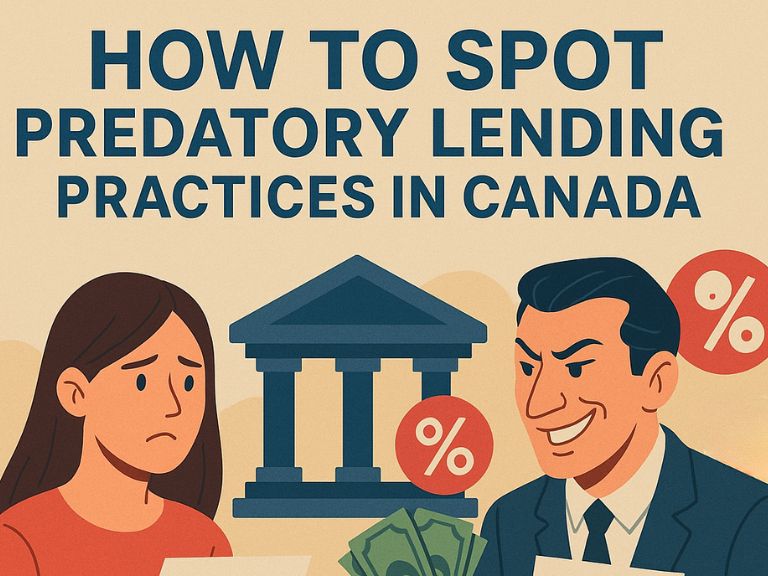
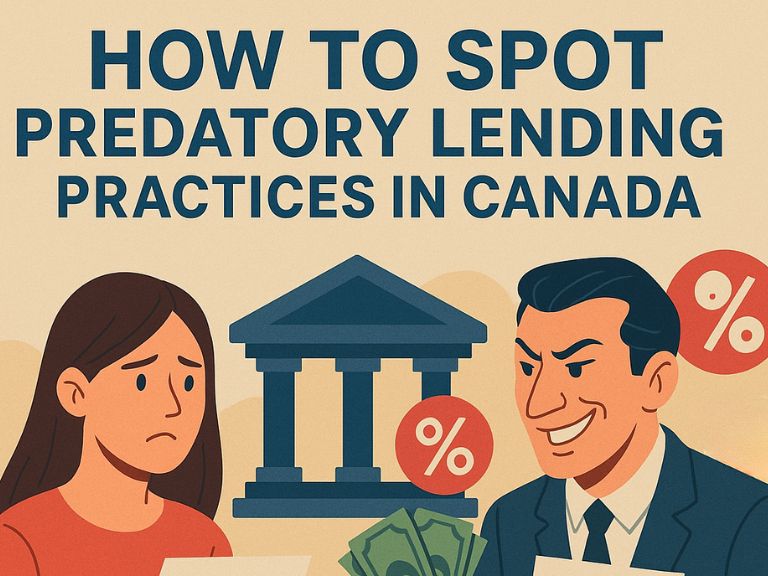
8. How to Spot and Avoid Predatory Lenders
Predatory lending practices, like excessive interest rates, hidden fees, and aggressive collection tactics, can trap borrowers in a cycle of debt.
Warning signs:
- No credit check required
- Approval in minutes without paperwork
- Vague or unclear repayment terms
- High-pressure tactics
Read more in Cashco’s guide to spotting predatory lenders.
Tip: Always read the fine print and ask questions. A legitimate lender will be transparent and upfront.
9. The Basics of Filing Your Taxes in Canada
Filing taxes isn’t just about getting a refund, it’s a legal obligation. Fortunately, Canada offers a variety of free resources for basic tax filing.
Tips:
- Keep all your T4s, receipts, and tax slips organized
- Use certified software like Wealthsimple Tax or TurboTax
- Consider working with a professional if your situation is complex (e.g., self-employed or multiple income sources)
Filing on time helps you avoid penalties and ensures you receive credits like the GST/HST or the Canada Child Benefit.
10. How to Build a Financial Plan That Reflects Your Life
A financial plan isn’t just about retirement it’s a roadmap for how you’ll earn, spend, save, and grow your money throughout life. Your plan should be flexible and tailored to your goals, whether it’s debt freedom, travel, homeownership, or early retirement.
Components to include:
- Monthly budget
- Debt repayment strategy
- Emergency fund
- Short- and long-term savings goals
- Retirement planning
Even a simple spreadsheet or template can serve as your financial GPS.
Final Thoughts: It’s Never Too Late to Learn
If you didn’t learn these financial basics in school, you’re in good company. Many Canadian adults feel unprepared to manage their money because financial literacy simply wasn’t part of their education. In fact, only a few provinces, ike Ontario and British Columbia, have integrated financial literacy into their high school curriculum. For most Canadians, concepts like budgeting, saving, credit scores, interest rates, and responsible borrowing were never formally taught.
But here's the good news: you don’t need a finance degree to start improving your money habits. In the age of digital tools and on-demand resources, it’s easier than ever to learn at your own pace and take control of your financial future.
Whether you're starting with something as simple as downloading a budgeting app, checking your credit report in Canada, or comparing personal loan options that fit your income and lifestyle, every action you take is a step toward long-term financial confidence.
Better yet, many financial tools are now designed specifically for beginners. You don’t have to be “good with money” to start using a budgeting system, rebuild credit through an installment loan, or understand how to calculate APR before borrowing.
Start with one small step today, like reviewing your monthly expenses or learning how interest works. These skills add up over time, giving you the power to make informed, confident choices.
Need a Supportive Place to Start?
At Cashco Financial, we believe that financial education and access go hand in hand. We’re committed to providing Canadians with the tools, resources, and judgment-free support they need to thrive—regardless of credit history.
Explore our Resource Centre for more beginner-friendly tips, or learn more about our Flex Loan if you’re looking for a safe and transparent borrowing option.
.png)